
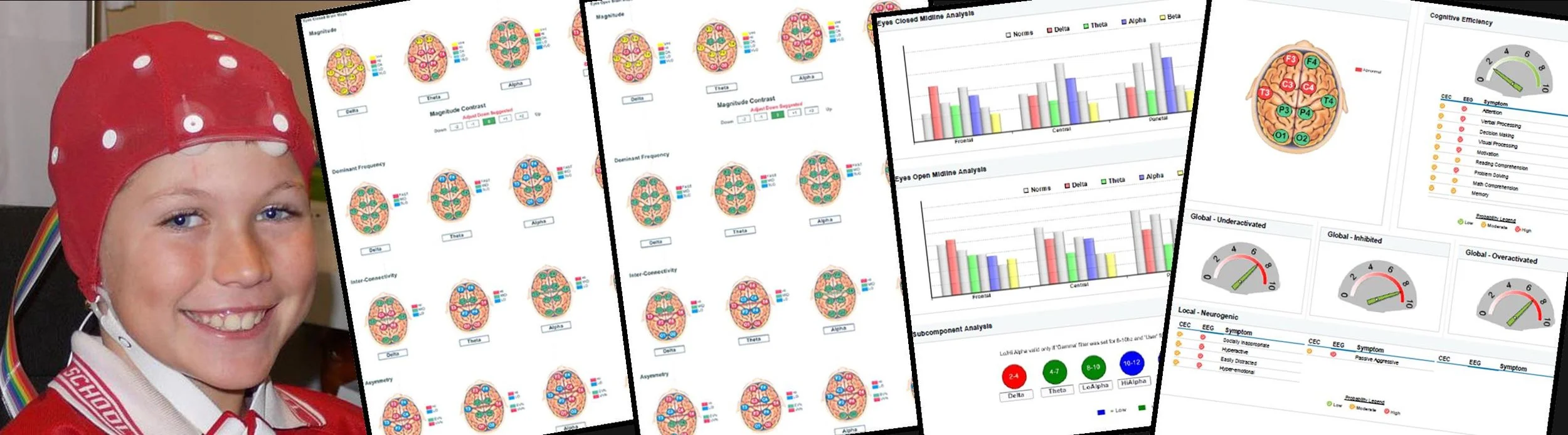
qEEG BRAIN MAPPING
A qEEG Brain Map provides an objective view of brain activity patterns and helps identify areas that may be contributing to challenges with attention, emotional regulation, stress resilience, sleep, cognitive performance, and other brain-related concerns.
Rather than relying only on symptoms, brain mapping allows us to evaluate how the brain is functioning and use that information to guide individualized care.
WHY START WITH A BRAIN MAP?

Many people know what they are experiencing but not why.
A qEEG Brain Map helps us look beyond symptoms and identify patterns that may be affecting:
attention and focus
emotional regulation
anxiety and stress response
sleep quality
cognitive performance
concussion recovery
developmental and learning challenges
The goal is not diagnosis.
The goal is understanding how the brain is functioning so care can be more personalized and precise.
WHAT IS A qEEG BRAIN MAP?

A quantitative electroencephalogram (qEEG) measures electrical activity throughout the brain.
The recorded data is compared with a large normative database and analyzed for patterns that may be associated with dysregulation or inefficient brain function.
The result is a visual map that helps us understand:
areas of over-activation
areas of under-activation
communication between brain regions
brain network efficiency
patterns associated with attention, regulation, and performance
WHAT TO EXPECT

Step 1 — Consultation & History
We review your symptoms, health history, goals, and relevant neurological factors.
Step 2 — Brain Recording
Sensors are placed on the scalp to record brain activity.
The process is non-invasive, painless, and typically takes about 30 minutes.
Step 3 — Analysis
The data is analyzed and compared with age-based normative databases.
We then evaluate how the findings relate to your symptoms, history, and goals.
Step 4 — Personalized Recommendations
Your results are reviewed with you and used to determine the most appropriate next steps.
Depending on the findings, recommendations may include:
Neurofeedback training
Brain–body care
Performance optimization
Additional evaluation when appropriate
WHY WE USE qEEG-GUIDED NEUROFEEDBACK

Every brain is different.
Rather than applying generic protocols based solely on symptoms, qEEG data helps guide training based on the individual's unique brain activity patterns.
This allows neurofeedback to be:
more individualized
more measurable
more targeted
easier to track over time
BRAIN MAPPING & NEUROPLASTICITY
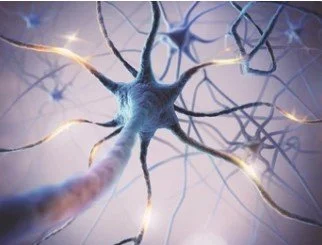
The brain has the ability to change throughout life.
This ability is known as neuroplasticity.
Research suggests that neurofeedback training may support changes in brain function and may be associated with measurable changes in brain networks over time.
By helping the brain practice more efficient patterns of activity, neurofeedback aims to support the brain's natural capacity for adaptation and self-regulation.
( Neurofeedback Training Induces Changes in White and Gray Matter, J. Ghaziri, et al, Clin EEG Neurosci, March 2013 )

IS A BRAIN MAP RIGHT FOR YOU?
A qEEG Brain Map may be helpful if you are experiencing:
ADHD or focus challenges
anxiety or stress regulation issues
sleep problems
brain fog
concussion recovery
learning difficulties
emotional regulation challenges
the need to improve performance, recovery, and adaptability under stress.
GET STARTED
Start with a qEEG Brain Map consultation and gain a clearer understanding of how your brain is functioning.